Reactive recruiting, is your company searching for talent or chasing urgency?

Open a position. Write the job description. Wait for CVs. Screen quickly.

Sound familiar?

This is reactive recruiting. And it is still the dominant model in most companies. The issue is not that it never works, but that it comes with a hidden cost that few organizations truly measure.

Pay transparency in hiring: what’s changing for employers and candidates

Pay transparency is becoming one of the central topics for the HR world. For years, many companies have treated compensation as information to share only in the final stages of hiring. The new European regulatory framework is changing this, and fast.

EU Directive 2023/970 is pushing organisations to adopt more transparent processes in compensation management and talent acquisition. This shift goes beyond regulatory compliance. It directly affects recruiting, employer branding and candidate experience.

The problem isn’t adopting AI, it’s using it poorly

Artificial intelligence has already entered everyday work. According to data from the HR Innovation Observatory of the Politecnico di Milano, 44% of workers use it today, a significant increase over the previous year. This trend is confirmed globally: as reported by the Microsoft Work Trend Index 2025 (a survey of 31,000 professionals across 31 countries), AI adoption in companies is accelerating rapidly.

And yet, this spread does not automatically translate into transformation. The point is not adoption. The point is use.

The future of work according to the HR Innovation Observatory 2026

The future of work has already begun. But are organizations truly ready to govern it?

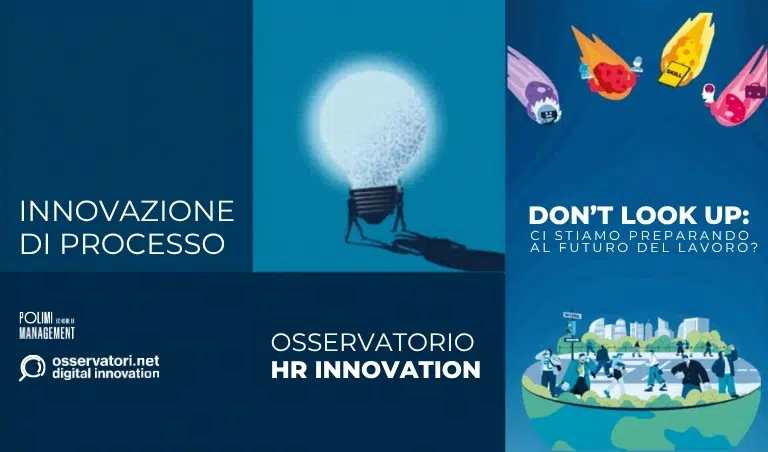
During the conference “Don’t Look Up: are we preparing for the future of work?”, the HR Innovation Observatory 2026 of the School of Management of Politecnico di Milano brought this question to the centre of the discussion. nCore HR joined the event as a partner.

The 2026 research highlights a labour market undergoing deep transformation: artificial intelligence is reshaping daily work, talent shortage remains a key challenge and HR departments must guide a change that involves not only technology, but also skills, roles, processes and organizational models.

AI and CV screening: how to make recruiting faster

Recruiting is becoming increasingly complex: more applications, more data to analyze, and less time to make effective decisions. Recruiters have to balance speed and quality, often using tools that are no longer suited to today’s context. The risk? Losing valuable candidates and slowing down the hiring process.

In this article, we analyze the challenges of modern recruiting and explore how artificial intelligence (AI) can support CV screening, making it faster, more objective, and more strategic.

AI applies on your behalf: what no one is saying

In recent months, more and more tools have emerged that allow candidates to apply automatically to job openings. The way they work is simple: you upload your CV, set a few criteria, and the AI finds the positions, fills in the applications and sends them, often to dozens of job ads per day.

At first glance, it looks like a natural evolution.

In reality, it introduces a deeper change: applying stops being an intentional action and becomes an automated process. It is no longer just people who apply, but systems.

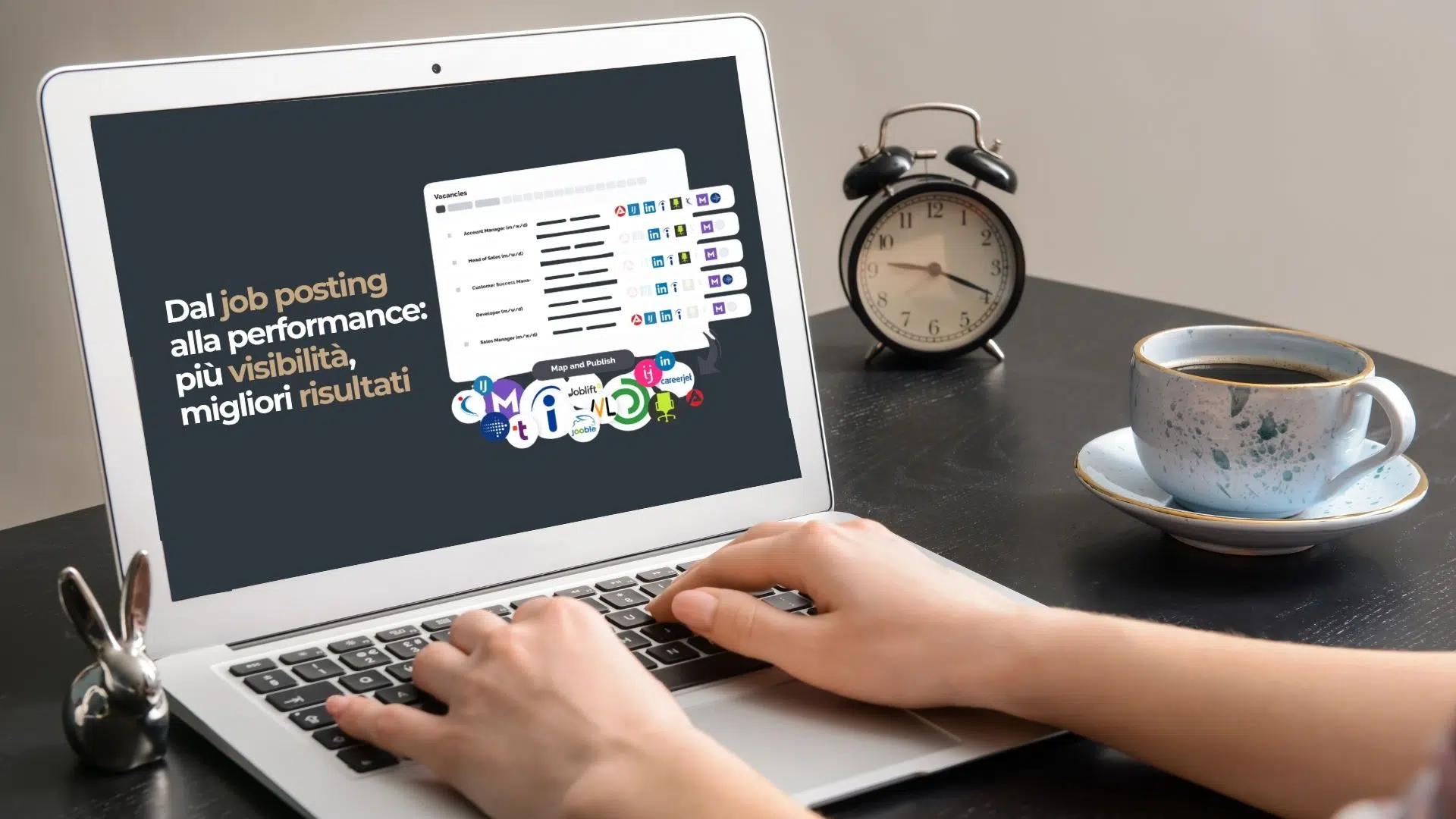
Data-Driven Job Posting: Publishing Is No Longer Enough

Writing a job ad is no longer the problem today. The tools have improved, content is produced quickly and the average quality of job descriptions has grown.

The real question is a different one: how many of the right people actually see that ad?

In the traditional model, most postings still rely on organic reach. But organic visibility has become structurally limited. The number of job ads published every day has increased significantly, platform algorithms favor sponsored content, and non-promoted ads are quickly overtaken by new content.

This means that publishing no longer guarantees reach.
And, in most cases, it does not even come close to generating it.

This is where the topic stops being “job posting” and becomes distribution.

Employer branding: what drives talent choices

Employer branding is not just what a company communicates; above all, it is what is perceived by candidates and employees. It represents the organization’s reputation as an employer and is built through elements such as people’s real experiences, company culture, values, and the work environment.

But today this is no longer enough. Employer branding has become a strategic lever throughout the entire talent acquisition process, as it directly impacts the ability to attract candidates, their level of engagement and the likelihood of retention.

Recruiting Becomes Agentic: What Really Changes

In recent years, artificial intelligence has entered recruiting processes mainly as a conversational tool. It has improved job ad writing, application summaries and the quality of communications.

Today the context has changed. Hiring processes are more complex, more exposed and more interdependent. Producing better content is not enough: the operational flow needs to be governed better. It is in this shift that the concept of agentic recruiting emerges — the integration of systems capable not only of generating output, but of intervening directly in the management of activities.

The difference lies not in the amount of technology adopted, but in the quality of the process architecture.

Assessing Potential Beyond the CV: What’s Changing

On February 18, at the Pandora headquarters in Milan, during the HRC Trends “Employer Branding & Talent Acquisition” event, the discussion among HR leaders highlighted a profound transformation: recruiting is not just adopting new tools, it is redefining its own decision-making criteria.

The question that emerged was not about which technology to use, but which logic to apply. In a market where roles and skills evolve rapidly, is it still enough to assess people solely on what they have done?

The CV remains a central tool, but its predictive power is increasingly being called into question.