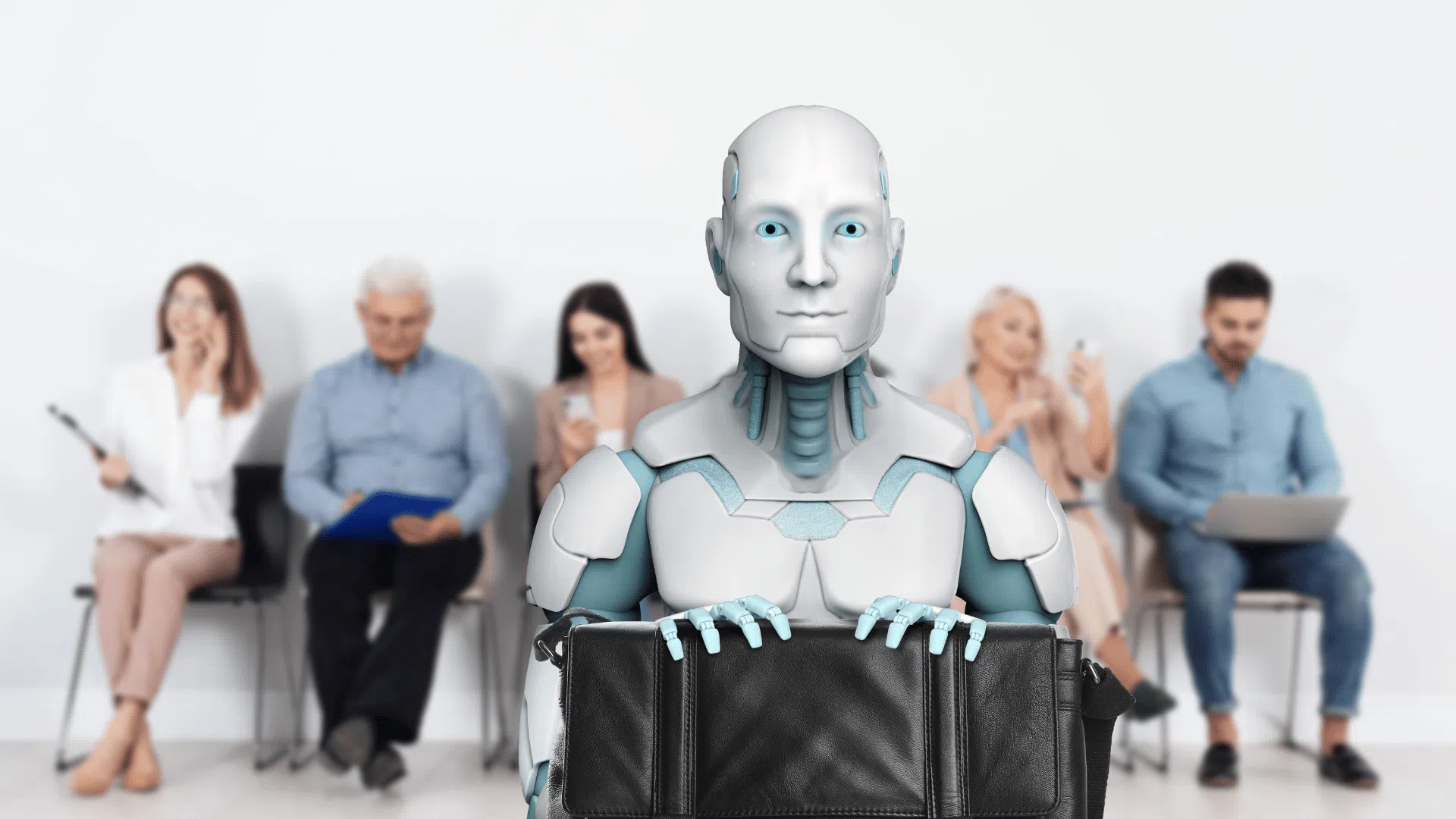
AI applies on your behalf: what no one is saying

In recent months, more and more tools have emerged that allow candidates to apply automatically to job openings. The way they work is simple: you upload your CV, set a few criteria, and the AI finds the positions, fills in the applications and sends them, often to dozens of job ads per day.

At first glance, it looks like a natural evolution.

In reality, it introduces a deeper change: applying stops being an intentional action and becomes an automated process. It is no longer just people who apply, but systems.

AI and Salary Transparency: How Recruitment Processes Are Changing

What the intersection between AI and the new European regulation means for the future of HR in Italy

In recent months, two topics have sparked public debate around work: the introduction of AI into recruitment processes and the new European directive on salary transparency.
Two phenomena often discussed separately, but which in reality converge on a single point: the profound transformation of HR teams’ work.

When major media outlets began talking about AI agents supporting recruitment decisions and, at the same time, about salaries becoming explicit in job postings, it became clear that these are not just passing trends.
They are signals of a structural shift: today, HR is expected to be faster, more transparent, and more consistent within an increasingly complex environment.

Recruiting Employed Candidates: The New Paradigm in Talent Selection

In recent years, the labor market has undergone a silent yet profound transformation: more and more professionals change jobs not out of necessity, but by choice. This shift overturns the traditional logic of hiring and forces companies into a change of perspective. Recruiting is no longer a matter of intercepting those who are searching, but of convincing those who are weighing whether to take a step forward in their career.

In this scenario, the recruiter can no longer simply assess skills and CVs. They are called upon to interpret the aspirations, fears and expectations of people who already enjoy stability and who will only question it when faced with real added value.

Recruiter 2026: The Secret Toolkit for Recognizing Real Candidates

To cope with the new challenges introduced by generative AI, recruiters need to evolve. Reading a CV is no longer enough: what is needed is strategic equipment. HR toolkits are sets of complementary tools and approaches that help select real candidates more effectively, ethically and at scale.

In this article we present the 5 most effective toolkits!

Selecting talents with AI and simulations: the future of recruiting

Discover how AI is transforming the way talent is selected.
Dive into the world of immersive assessments and game-based tests, where real behaviors are what count.
Learn how tools like nCore HR help recruiters make more objective and transparent decisions.
Reduce bias and truly value soft skills.
Get ready to build fairer, more innovative and more strategic hiring processes.

Talent & Tonic: Generations, Technology, and the Future of Work

How can we build an authentic dialogue between people and technology, between different generations and a new idea of work driven by AI?

Talent & Tonic, the event format created by nCore HR, brought this conversation from Rome to Milan, bringing together professionals, companies and recruiters to explore the future of talent acquisition.

A journey through AI, generations and new work cultures, where technology and empathy meet to redesign the way we attract and nurture talent.

AI in Recruiting: Opportunities and Risks with “AI-Enhanced” Candidates

Would you trust an algorithm to decide if you are the right person for your dream job?
In recruiting, this is no longer a hypothetical question: artificial intelligence is already rewriting the rules of selection.
Between CVs “enhanced” by AI, video interviews analyzed by software, and new laws on the way, the line between efficiency and risk is becoming increasingly thin.

Recruiter on Vacation

August. As the days get longer and inboxes quieter, candidate applications and Talent Acquisition processes don’t take a break. For recruiters, the real challenge isn’t just closing the laptop—it’s ensuring everything keeps flowing smoothly during their absence.

So how can you do it? We’ve put together a summer survival kit for recruiters with the best strategies to automate, delegate, and return in September with your team and processes more aligned than ever.

How Maccaferri Revolutionized Talent Acquisition with nCore HR

Standardizing recruitment processes on a global scale is a strategic challenge for multinationals, especially in highly technical sectors like civil and environmental engineering.

Maccaferri, an industrial group with over 140 years of history and a presence in more than 100 countries, embraced this digital transformation by focusing on optimizing Talent Acquisition.
To achieve this, they chose nCore HR, an intelligent and customizable ATS platform, as their partner to innovate the international recruiting process.

A Global Need: Standardizing the Candidate Experience

Between 2021 and 2022, Maccaferri recognized the need to make the candidate experience consistent and of high quality across all global locations.
The system used until then, operating solely in Italy, showed several weaknesses in terms of usability and scalability.

“Operating globally, our goal was to standardize the candidate experience and leverage data to improve organizational efficiency.”

Maccaferri’s international context – with a focus on geotechnical, structural, and environmental engineering solutions – required a platform capable of managing complex processes seamlessly, while remaining adaptable to diverse markets and HR cultures.

AI and Talent Acquisition: Insights from the International Talent Acquisition Forum 2025

The event focused on a critical topic shaping the future of recruitment: the role of artificial intelligence (AI) in enhancing both efficiency and fairness in hiring processes.

A Setting That Blends Tradition and Innovation

The choice of venue—a place where tradition meets innovation—reflected the forum’s central message: recruitment must evolve, but the human element must remain at the core. The forum’s goal was to explore how AI can be used to reduce bias and create a fairer, more inclusive hiring process—ultimately building a stronger future for the industry.

Real-World Case Studies on AI in Recruitment

Several companies shared their direct experiences with adopting AI in recruitment, offering valuable insights:

1. Blind Resumes and Internal Mobility

One organization implemented an AI-powered ATS to automate candidate screening and re-engage previously rejected candidates.

  • Highlights: Use of blind resumes to promote diversity, and integration with HR systems to support internal mobility.
  • Challenges: Difficult to scale in regions with low hiring volumes, where manual sourcing is still essential.

2. Automatic Interview Notes

Another company, early in its AI adoption journey, implemented a tool that automatically takes notes during interviews, analyzing language and gender dynamics.

  • Highlights: Reduction of bias in interview evaluations.
  • Challenges: Need for deeper integration with existing HR systems.

3. Productivity Tool Integration

A different organization extended AI use through a digital assistant that records meetings and manages interviews.

  • Highlights: Process standardization and reduced bias.
  • Challenges: Requires careful governance to ensure data privacy and compliance.

4. Invisible AI Sourcing

Another case involved AI-powered sourcing tools that identify suitable public profiles online based on job descriptions.

  • Highlights: Boosted recruiter efficiency, particularly in hard-to-fill roles such as those in manufacturing.

Opportunities and Challenges: The Future of AI in HR

A key theme throughout the forum was the need for integration. Many companies expressed concerns over fragmented HR tech stacks—with separate tools for ATS, chatbots, scheduling, and more—resulting in disjointed experiences and increased complexity. The ideal vision is a fully integrated, secure, and seamless system that doesn’t require heavy customization.

Data privacy and GDPR compliance also took center stage. The use of AI, particularly in interview recordings, requires candidates’ explicit consent. If some candidates opt out of AI-based assessments, it could unintentionally create inequality by excluding their data from the same analysis used for others.