
The future of work according to the HR Innovation Observatory 2026
The future of work has already begun. But are organizations truly ready to govern it?
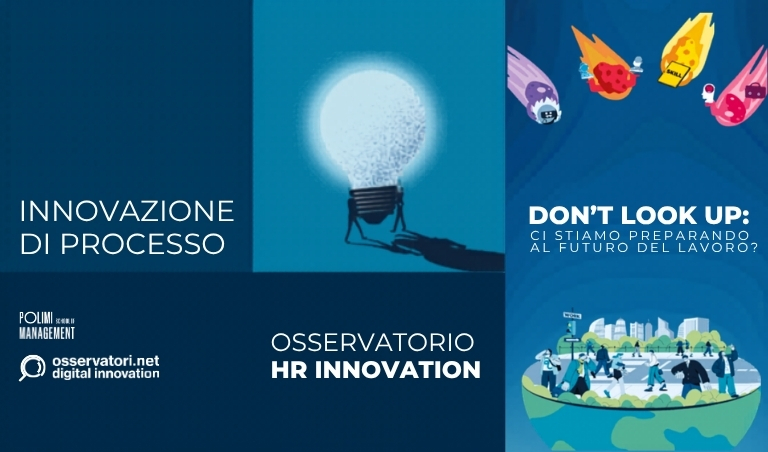
During the conference “Don’t Look Up: are we preparing for the future of work?”, the HR Innovation Observatory 2026 of the School of Management of Politecnico di Milano brought this question to the centre of the discussion. nCore HR joined the event as a partner.
The 2026 research highlights a labour market undergoing deep transformation: artificial intelligence is reshaping daily work, talent shortage remains a key challenge and HR departments must guide a change that involves not only technology, but also skills, roles, processes and organizational models.



AI has already entered everyday work
Today, 44% of Italian workers use AI tools, marking a 12-percentage-point increase compared to the previous year. Artificial intelligence is now a concrete presence in daily work activities.
However, its use is still mainly operational: it is mostly used to create content, manage information, automate repetitive tasks and speed up everyday activities.
The benefits are already visible:
- 30 minutes saved on average per day;
- greater speed in completing tasks;
- support in improving output quality;
- better workload management.
The critical point is that only 9% of organizations manage the time saved through AI in a structured way. Without a clear strategy, this time risks being absorbed by marginal activities rather than being reinvested in training, innovation and the development of new skills.
In many cases, AI is also being adopted by people before companies: 34% of employees use tools that are not promoted by their organization, while 51% combine external tools with company-approved ones, creating potential risks for privacy, data security and governance.
Talent shortage and skills: the real challenge is making work evolve
The research confirms the central role of talent shortage: 75% of Italian organizations report difficulties in hiring new personnel. For many companies, the main challenge is finding candidates with the right technical skills, especially in digital areas and specialized roles.
The issue, therefore, is not only the availability of people in the market, but the alignment between required skills and available skills.
At the same time, companies must also focus on the people already within their organization:
- 49% of companies expect to reallocate or reskill at least 5% of their workforce;
- only 15% of HR departments feel ready to guide this transformation;
- 57% of workers report the absence of company initiatives supporting the adoption of AI.
The challenge is not only to hire new talent, but to build continuous upskilling and reskilling paths, helping people become better prepared to work with technologies that are increasingly integrated into business processes.
Wellbeing, engagement and managers: HR at the center of change
Alongside technological transformation, the research highlights an urgent issue: the relationship between people and work remains fragile.
Only 15% of workers say they are fully engaged, and just 8% report feeling well across all the dimensions of wellbeing considered: physical, relational and psychological. In this scenario, organizational wellbeing becomes a strategic lever to attract, retain and empower people.
The role of managers is also set to change. As AI enters operational and decision-making processes, managers will increasingly need to act as figures capable of connecting people, technologies and intelligent systems.
However, some critical issues still emerge:
- 1 in 5 managers is not aware of the ethical implications of AI;
- 22% do not clearly know which activities should be delegated to technology and which should remain under human responsibility.
For this reason, the evolution of managerial skills will be one of the most important challenges for HR departments in the coming years.
Frequently-asked questions
- What are the main HR trends emerging from the HR Innovation 2026 research?
The main trends concern the adoption of AI in everyday work, talent shortage, the need to update skills and the evolution of the role of managers.
- How is AI currently being used by Italian workers?
AI is used for operational activities: creating content, managing information, automating repetitive tasks and supporting everyday productivity.
- Why do HR departments play a central role in the future of work?
Because they must guide the transformation of processes, skills and organizational models, ensuring that technological innovation is integrated in a conscious, sustainable way that truly benefits people.
Conclusion
The research findings reveal a clear message: innovation has already entered everyday work, but true transformation still needs to be governed.
AI is increasingly widespread, yet companies often lack a clear strategy. Required skills are changing rapidly, but not all organizations are ready to support this evolution. Engagement and wellbeing remain fragile, while the role of managers must evolve to guide people and technologies consciously.
For HR departments, the challenge is not simply to introduce new digital tools. It is to rethink processes, roles and organizational models in order to build a more sustainable, effective and human future of work.
So the question is no longer whether we will use AI.
The real question is: are we truly changing the way we work?
Source: Osservatorio HR Innovation del Politecnico di Milano
Want to understand how AI can help you make recruiting faster and more conscious?
Click here and discover nCore HR!



Other Articles